Digital Skills Training Project for the Construction Industry and Related Sectors
Project No. 2.3.1.2.i.0/2/23/A/CFLA/003
Latvian Construction Digitalization Honored with the First “Digital Construction Excellence Award 2025”
On December 5, VAS “Valsts nekustamie īpašumi” (VNĪ), together with Riga Technical University (RTU) and SIA “Latvijas Standarts” (LVS), concluded the first competition “Digital Construction Excellence Award 2025”, honoring the best BIM and digital solution projects in Latvia.
The closing event at TAB FAB cinema pavilion at 58a Miera Street brought together industry professionals, project authors, and students, offering an opportunity to explore the latest digitalization trends in construction.
The goal of the competition was to highlight the most effective BIM (Building Information Modeling) solutions and digital innovations, promoting knowledge exchange between the private and public sectors. “Digital transformation and the implementation of BIM solutions is not just a technical process – it is an opportunity to make construction more efficient, sustainable, and transparent, fostering collaboration between the private and public sectors,” emphasized VNĪ Chairman Renārs Griškevičs.
The event was opened by Parliamentary Secretary of the Ministry of Economics, Jurģis Miezainis, RTU Rector Tālis Juhna, and LVS Director Ingars Pilmanis. Rector Juhna noted:
“This award demonstrates that the Latvian construction sector is innovative, dynamic, and excellence-oriented. Riga Technical University’s task is to continue strengthening the connection between industry and science, fostering new solutions and preparing specialists who ensure competitive and modern construction practices. Digital construction is no longer just a future concept – it is the new reality.”
LVS Director Pilmanis added:
“This event provides an opportunity to explore digitalization possibilities and share best practices, building a data-driven, internationally competitive construction ecosystem.”
The award winners were determined in three categories: “BIM Project”, “BIM Construction Object”, and “Digital Innovation”.
- In the “BIM Project” category:
- First place: Satekles Business Center (SIA “Forma 2”)
- Second place: Aircraft Maintenance and Repair Hangar with Office Space (SIA “Arhitekta Gundara Vīksnas birojs”)
- Third place: Press House Quarter, Phase 2 (SIA “ARHIS Arhitekti”)
- Special award: New Liepāja Prison Complex (SIA Citrus Solutions)
- In the “Digital Innovation” category:
- First place: Unified Data Environment BAUKOR (SIA “Artehus”)
- Second place: Latvian National Theatre Extension (SIA “AB3D”)
- Third place: Digital Platform for Real Estate Management “PŪCE” (SIA “Owner”)
- In the “BIM Construction Object” category:
- First place: Satekles Business Center (SIA “Forma 2”)
- Second place: Baltic Cargo Hub (SIA “UPB”)
- Third place: Kaivas Quarter (SIA “YIT Latvija”)
- Additionally, the YIT Audience Award was given to the SIA “Forma 2” team for the most extensive use of digital functionalities across the building lifecycle.
The competition was organized by VNĪ in collaboration with RTU and LVS, with projects evaluated by professionals from the Latvian Association of Architects, the Construction Contractors Association, the Real Estate Developers Alliance, the State Construction Control Bureau, and other industry organizations. The competition’s aim is not only to identify the best projects but also to promote knowledge exchange and inspire digital innovations in construction.
“The idea of digitalizing construction and implementing BIM solutions is not just a technology issue – it is a strategy that makes the Latvian sector competitive and sustainable,” emphasized Griškevičs. Competitions and forums like this provide professionals and students alike with the opportunity to explore best practices and foster the development of the sector in the future.
Source: rtu.lv
From Candle to Lightbulb: How Digitalization and Artificial Intelligence Are Transforming Business Processes and Training
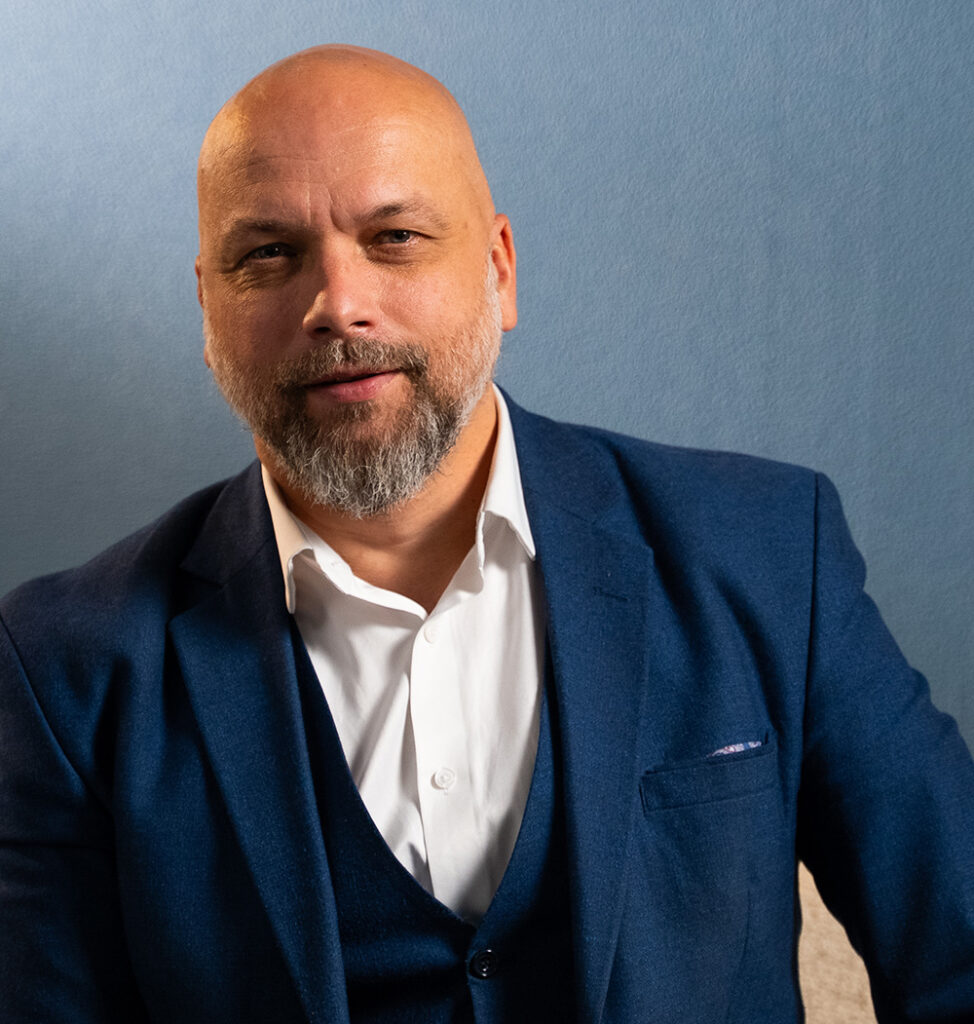
Interview participants:
Aldis Zauls
SIA “WIN partners”
Business Trainer and Consultant
How does the introduction of new digital tools affect a company’s operations?
At first – poorly. It’s very much like learning to ride a bicycle: in the beginning, when a person is learning, they fall and stumble, it’s painful, and overall everything happens much more slowly than just walking. Similarly, at the initial stage of introducing new digital tools, a company experiences “negative time” – extra resource use and added stress.
Of course, if digitalization is carried out properly and thoughtfully, there comes a moment when processes begin to run significantly faster, more structured, and much more productively. At the same time, it’s important to remember that digitalization can occur in two fundamentally different directions.
One direction is optimization — essentially, improving existing processes slightly. In this case, the gain is usually not very large, roughly in the range of 5% to 15%. In short, certain parts of a process are done faster, but the overall process remains largely unchanged.
The other direction is innovation, which, of course, is based on digitalization. Innovation means creating something new and fundamentally different from previous approaches in existing processes, tools, and working methods. In such cases, processes are often significantly restructured – they are shortened, unnecessary steps removed, and many things happen in a completely different way than before. The innovation process, naturally, is much longer and more complex, but the benefits are incomparably greater. Here, the gain is no longer about 10%, but sometimes 200%, 500%, or even more.
The classic and most illustrative example in this context is the candle and the light bulb. Both are sources of light. A candle could be improved repeatedly – it could burn brighter, longer, and more steadily. Then the electric light bulb was invented to provide illumination in a completely different way. This is a clear example of an innovative process, and the difference between these approaches is immediately obvious.
How do digitalization and IT innovations change the training process?
Currently, these solutions are entering the training field relatively slowly. It is clear that more and more processes can be performed faster and more efficiently, reducing direct human involvement. For example, in our work, trainers increasingly do not meet colleagues or project managers directly but interact with clients, while everything else – organization, planning, tracking – is handled through various digital applications and tools.
However, what is emerging now, and what I have already seen in practical examples, can significantly change and diversify the intensity of the training process itself. For instance, role-playing exercises are often used in training, but implementing them in practice is a big challenge. Ideally, each participant should have the opportunity to fully practice situations, such as sales scenarios or “one-on-one” managerial conversations. These skills cannot be learned just theoretically — they must be regularly trained.
Previously, such role-playing often involved one pair performing the scenario in front of the whole group. But then the question arises — how does the other participant act? That person needs guidance on how to assume the role so that the manager or salesperson can learn effectively. If this task is done by a trainer, it is one person, making it practically impossible to train, for example, 12 people simultaneously.
What is starting to happen now is the emergence of AI-based solutions, where the role is taken over by artificial intelligence. There is a digital face, a computer performing the function – it can play the opposite role, ask questions, and react to answers. Such a system can be programmed at various quality levels – not too “awkward” or too “good” as an employee, but exactly as needed for the particular skill being trained. If the goal is to train question-asking, it can be precisely programmed to focus on that skill.
At this point, this type of skills training, including the development of people management and communication skills, can reach the next level. It can be safely simulated in a controlled environment, cooperating with a computer. Then artificial intelligence can provide feedback, suggestions, and even indicate during the conversation what should be changed or improved. In my opinion, this could become the next big leap in our industry in terms of employee skill acquisition and development.
The European Commission Representation in Latvia has launched an informational campaign about the EU Multiannual Financial Framework and the investments Latvia receives from various EU funds. The campaign highlights successfully implemented projects that promote both economic growth and citizens’ well-being, as well as regional development.
The third EU Multiannual Financial Framework period will conclude in 2027, during which Latvia receives significant EU funding. As emphasized by Armands Eberhards, Deputy State Secretary for EU Funds at the Ministry of Finance, in 2025 the volume of EU Fund and Recovery Fund investments in Latvia reached a historically high level, exceeding one billion euros.
Source: latvia.representation.ec.europa.eu
Information about one of the courses available in the project:
LEAN and Ergonomics for an Efficient Remote Work Process
Instructor:
Henrijs Kaļķis
Training Course Content:
- Fundamentals of LEAN and ergonomics
- Identifying efficiency losses in remote work
- Practical solutions, methods, and techniques for effective remote work
- Practical ergonomic tips and solutions (relaxation exercises, psychological relief, demonstrations involving participant engagement)
Client Relationship Digitalization
The Latvian Association of Window and Door Manufacturers
Offers a training project:
“Digital Skills Training Project for the Construction Industry and Related Sectors”
Project No. 2.3.1.2.i.0/2/23/A/CFLA/003
Project implementation until 30 June 2026
Applications for new training courses in the project are open until 30 April 2026.
To apply, please send an information request to apmacibas@lldra.lv
The goal of the project investment is to provide micro, small, medium, and large enterprises registered in the Republic of Latvia with basic digital, robotics, and automation skills, digital transformation and digital innovations, including skills that promote export development, high-level digital management skills at the company leadership level, and skills for using digital technologies in various business processes.
The project is implemented with financial support from the European Union Recovery and Resilience Facility (RRF).
The initial total eligible project costs amount to EUR 1,134,000, including a planned RRF support of EUR 567,000.
The opinions expressed in this publication are solely those of the author(s) and do not necessarily reflect the views of the European Union or the European Commission. The European Union and the European Commission are not responsible for them.