Digital Skills Training Project for the Construction Industry and Related Sectors
Project No. 2.3.1.2.i.0/2/23/A/CFLA/003

Satellite Data Will Help Fight Illegal Construction in Latvia
For four years now, Latvia has been an Associate Member State of the European Space Agency (ESA), which supports various projects promoting space science, related educational training, innovations, and flight segment activities. Currently, a high-profile project has been launched to test and subsequently demonstrate the application of satellite data for the remote detection of illegal construction activities and non-compliance.
One of the project’s cooperation partners is the State Construction Control Bureau (BVKB). Its Director, Baiba Vītoliņa, explains that the project will become a fundamental component in the modern and technologically advanced supervision of the construction sector in Latvia. It will promote data-driven decision-making within the construction industry, and it will not only help evaluate whether the use of satellite data can effectively address the issue of illegal construction but will also foster sustainable development by ensuring an orderly, transparent, and legally compliant building environment. Baiba Vītoliņa emphasizes: “If the feasibility study conclusions and tests are deemed successful, the commercial implementation of the solution will have a positive impact on the national economy by reducing the negative consequences associated with illegal construction and improving the overall reputation of the construction sector.”
ESA can bring significant benefits to Latvian business, public administration, science, and education. By cooperating with the international space industry, companies develop new technologies and acquire new knowledge through training led by ESA experts. This collaboration allows the utilization of space data to improve daily life, promote sustainability, and support the development of next-generation technologies.
Source: bvkb.gov.lv
Future Opportunities and Challenges of Digital Construction
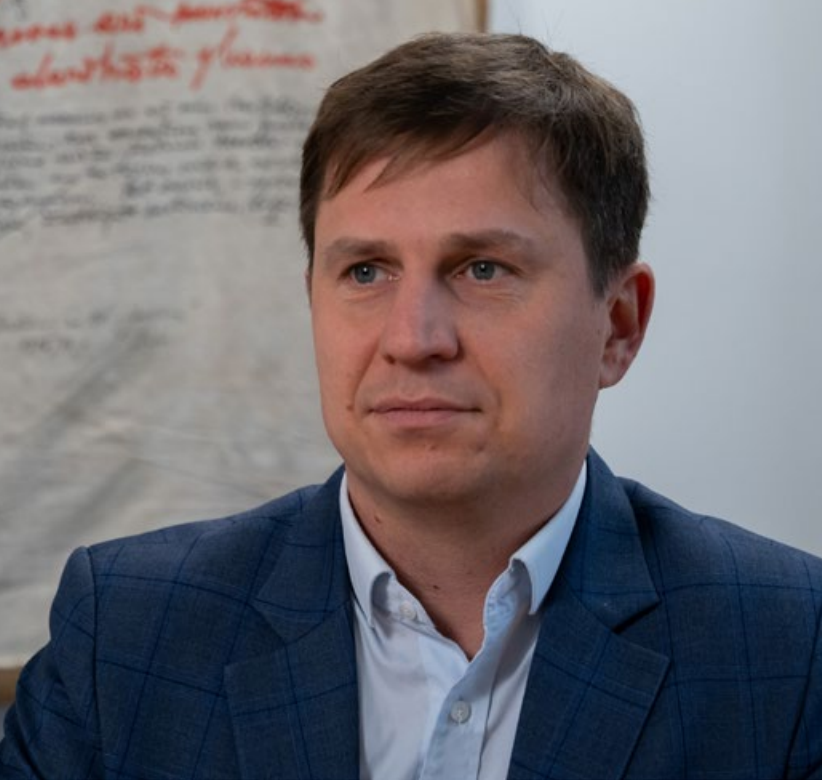 Intervijā piedalās:
Kaspars Rožkalns
SIA “UPB Nams”
Valdes priekšsēdētājs
What is your experience and specialization in the construction industry?
My name is Kaspars Rožkalns, and I represent SIA “UPB Nams,” which is part of AS “UPB”. SIA “UPB Nams” is engaged in general contracting, including design-build services.
Why is it important for people working in the industry to continuously learn?
To stay relevant! New materials and building products emerge constantly, leading to new client requirements and novel architectural concepts. To keep up with all of this and remain relevant, you have to learn. A large portion of these innovations is related to sustainability—understanding what sustainability is, how to measure it, whether it is carbon dioxide ($CO_2$) emissions, or if it involves a combination of material reuse, modeling methodologies, how a material is manufactured, how to determine its carbon footprint, what an EPD (Environmental Product Declaration) certificate is, and where to apply it. All of this requires continuous learning—as does understanding BREEAM and LEED certifications, knowing how to certify a building, and determining its category and level.
What competencies are most important at the management level in the construction industry?
At the management level, a leader’s core competencies consistently remain strategic vision and communication. What is being added now is digital literacy—meaning, not necessarily knowing how to program every individual detail, but knowing what is available on the market, how software systems integrate with one another, and what can or cannot be done with data.
How are IT systems introduced in the industry, and why is it important to master them?
Information technologies in the construction industry are highly varied and numerous, including Building Information Modeling (BIM) systems. However, they must be categorized separately, as one section includes information technology applicable to the phase when the object is being created, such as architecture and engineering design. This stage falls under BIM.
The next stage is project oversight or project management. By utilizing digital tools, a project manager is able to manage a large-scale project, thereby making their team’s work more efficient.
Following the construction phase comes facility management. This is the subsequent stage—how we utilize the previously developed materials and models moving forward. Therefore, financial tools and project management are digital, just as design and architecture are; the array of tools is incredibly vast.
In your opinion, what is the significance of the DIGI SPĒKS conference that took place in December?
Everyone keeps saying that we all need to digitalize, but in all honesty, each business must answer three fundamental questions: Why do we need it? How much will it cost? What is the actual benefit? The conference provides answers to these questions through practical, real-world examples.
The truth is, a large portion of digital solutions out there is not suitable for everyone. You should only implement digitalization if it makes processes cheaper, faster, or—ideally—both. Introducing too many new systems simultaneously places a heavy burden on employees, which can lead to frequent, highly expensive errors.
It was fascinating to see how multiple speakers from completely different sectors kept referencing the 3D environment. You might wonder, what could construction possibly have in common with coat hangers? On the surface, nothing. However, 3D modeling allows you to build digital models whether you are designing a building, a hanger, or a piece of clothing. It lets you experiment with materials and colors, iterate freely, and work significantly faster than you ever could manually.
What is your vision for the future development of the industry?
More and more buildings will transition into BIM or a 3D environment, and the next logical steps are moving toward 4D and 5D environments.
- 4D Environment: This adds the component of time to the 3D model, allowing you to visualize the entire construction process week by week.
- 5D Environment: This integrates cost along with the time component. It gives you the ability to see exactly how much funding is required week by week to keep the build moving forward.
This won’t be a fast transition because it is highly complex, but it is exactly where the construction industry is heading. Clients will be able to follow the building model dynamically, tracking construction progress, seeing how much individual components cost, where to buy them, and what their delivery times look like. Ultimately, it means being able to project an exact building handover date—that is the future of digital construction!
The next major challenge will be sustainability. We will be required to calculate the $CO_2$ footprint for every single building. This means defining and measuring the emissions of every material, every process, and the specific energy types used. Consequently, materials will start carrying two distinct prices: a price expressed in Euros, and a price expressed in $CO_2$.
Tracking and accounting for all of this is an enormous undertaking. To put it mildly, it will be complicated—but it is entirely possible, and we can do it right now. It will start as an experimental process, transition into a regulatory framework, and finally become standard industry practice. And the only way to pull this off is by leveraging digital tools.
As Maya Slavova explains in the EPALE Resource Kit: Building digital, green, and inclusive futures:
“The skills required to succeed will be shaped by rapid technological advances, shifts in societal norms, and changes in the global workforce. While technical skills like AI literacy and cybersecurity awareness are vital, human-centric skills such as emotional intelligence, adaptability, and cross-cultural competence are equally essential.
To thrive in this evolving landscape, a commitment to lifelong learning is non-negotiable. The future belongs to those who are not only skilled but agile, empathetic, and capable of collaborating across diverse environments. By focusing on these core capabilities, you will be well-equipped to navigate the exciting and unpredictable challenges of the coming years.”
Source: epale.ec.europa.eu
INFORMATION REGARDING ONE OF THE COURSES AVAILABLE IN THE PROJECT
Practical AI Tools for Business
LECTURER: Ervīns Butkevičs
TRAINING COURSE CONTENT:
- AI Implementation Strategies: Developing frameworks to successfully integrate artificial intelligence into existing business models and long-term planning.
- Artificial Intelligence and Data Management: Best practices for data curation, storage, and processing to ensure valuable, high-quality inputs for AI models.
- Automation and Efficiency in Systems: Utilizing AI-driven automation to streamline digital systems, reduce manual workloads, and eliminate routine operational errors.
- Regulatory Compliance Using AI: Leveraging smart technologies to monitor, audit, and maintain full compliance with local and European legislation.
- Artificial Intelligence and Operational Process Optimization: Transforming everyday corporate workflows to boost overall performance, reduce costs, and maximize resource utilization.
DIGITAL SALES SOLUTIONS