Digital Skills Training Project for the Construction Industry and Related Sectors
Project No. 4.2.4.1/1/24/A/006
Construction Industry Celebrations at the Small Guild – Top Professionals Receive Highest Recognition
In October, at the Small Guild in Riga, the prestigious construction industry award – the “Construction Industry Grand Award – Cornerstone” – was presented at a ceremonial event. This year, twelve outstanding industry professionals were honored, recognizing both experienced specialists for their lifelong contributions and younger talents who have made significant achievements in recent years.
The award has been held for the 12th time, and its primary goal remains the same – to highlight and recognize the best of the best architects, civil engineers, designers, structural engineers, construction supervisors, researchers, and building materials manufacturers whose contributions to the industry are invaluable. To date, 142 professionals have received the Cornerstone Award, including the 12 laureates of 2025. Candidates are nominated by workplaces, industry non-governmental organizations, and partner institutions.
Traditionally, the award is presented in two main categories – “Lifetime Contribution to the Construction Industry” and “Engineer/Architect of the Year,” which includes multiple subcategories such as Engineer of the Year, Architect of the Year, Young Engineer of the Year, Structural Engineer of the Year, Project Manager of the Year, and Construction Supervisor of the Year. Industry universities nominate candidates for the “Student of the Year” title, awarded to both master’s and bachelor’s graduates. Thus, the ceremony also serves as a bridge between experienced professionals and the next generation of specialists.
This year, a record number of candidates – 42 in total – were evaluated. Eight candidates were nominated in the “Lifetime Contribution to the Construction Industry” category, 19 in “Engineer/Architect of the Year,” 13 in “Student of the Year,” and two experts were nominated for “Riga Engineer of the Year” by the city municipality.
In the “Lifetime Contribution to the Construction Industry” category, awards were given to six professionals, including Juris Dambis, longtime head of the National Heritage Board; Kārlis Andrejs Ataugs, road engineer at SIA “Firma L4”; Raimonds Eizenšmits, Chairman of the Board of the Latvian Association of Civil Engineers; Vladimirs Akimovs, longtime Director of the Road Competence Center at VSIA “Latvijas Valsts ceļi”; Jānis Ivbuls, Executive Director at SIA “LBS-Konsultants”; and Modris Ozoliņš, Construction Manager at SIA “MONUM.” Certificates of recognition in this category were awarded to Andrejs Porietis and Uldis Dātavs for their long-term and significant contributions to the industry.
In the “Engineer/Architect of the Year” category, awards in several subcategories were given to seven outstanding professionals, including Mārtiņš Suta (Engineer of the Year, SIA “Primekss”), Dāvis Špaks (Young Structural Engineer of the Year, SIA “ARA intellect”), Imants Kozačkovs (Structural Engineer of the Year, SIA “ARA intellect”), Rolands Sedliņš (Young Engineer of the Year, SIA “Būve un Forma”), Māris Feldmanis (Construction Supervisor of the Year, SIA “Firma L4”), and architects Linda Krūmiņa and Miķelis Putrāms (Architects of the Year, SIA “MADE Arhitekti”). Ten additional professionals received certificates of recognition in this category, including Imants Lukša, Construction Manager at SIA “Latgalija,” who also received the public choice award.
Diplomas for the “Riga Engineer of the Year” category were awarded to experts from the Architecture Department of the Riga City Development Department – Valts Jurisons and Herberts Bēms, presented by Riga Mayor Viesturs Kleinbergs.
In the young professionals category, “Student of the Year” awards went to Kristaps Bivbāns (Bachelor, RTU Faculty of Civil Engineering and Mechanical Engineering) and Danīls Ņikiforovs (Master, RTU Faculty of Civil Engineering and Mechanical Engineering). Certificates of recognition were awarded to Darja Zieneviča, Alens Pelcbergs, Matīss Godļevskis, Dāvis Dragons, Gustavs Prolis, Ansis Zītars, and Inga Kaufmane, while special awards and public choice awards went to Artūrs Paļčikovskis and Arnolds Polis.
Raimonds Eizenšmits, Chairman of the Latvian Association of Civil Engineers, emphasized: “The purpose of the Grand Construction Industry Award is to highlight and honor the people – architects, civil engineers, designers, and other professionals – without whose contributions no quality building could exist. It creates a link between experienced professionals and the younger generation, ensuring the industry’s sustainability and growth.”
Nelda Elsiņa, award manager, added: “Every year the significance of the award grows, and all candidates are truly outstanding. The evaluators’ task is to carefully select and highlight the best of the best. The ‘Grand Construction Industry Award’ is a celebration and inspiration for the entire sector.”
Evita Domello, Chairperson of SIA “MONUM,” noted: “This award is special because behind each award is a person with their experience, responsibility, and contribution. It highlights work that often remains behind the scenes, but it is precisely this work that shapes our daily environment and quality. The laureates are an inspiration to all of us.”
This year’s recipients once again demonstrated that the construction industry relies both on the knowledge of experienced professionals and the energy of young talents. Their work shapes our everyday environment – from daily buildings to architectural landmarks – and this award recognizes contributions visible in every wall and window.
Source: blbs.lv
Surfing the Waves of Human Resource Management: Eva Nolendorfa’s 20 Years of Experience in Business Development
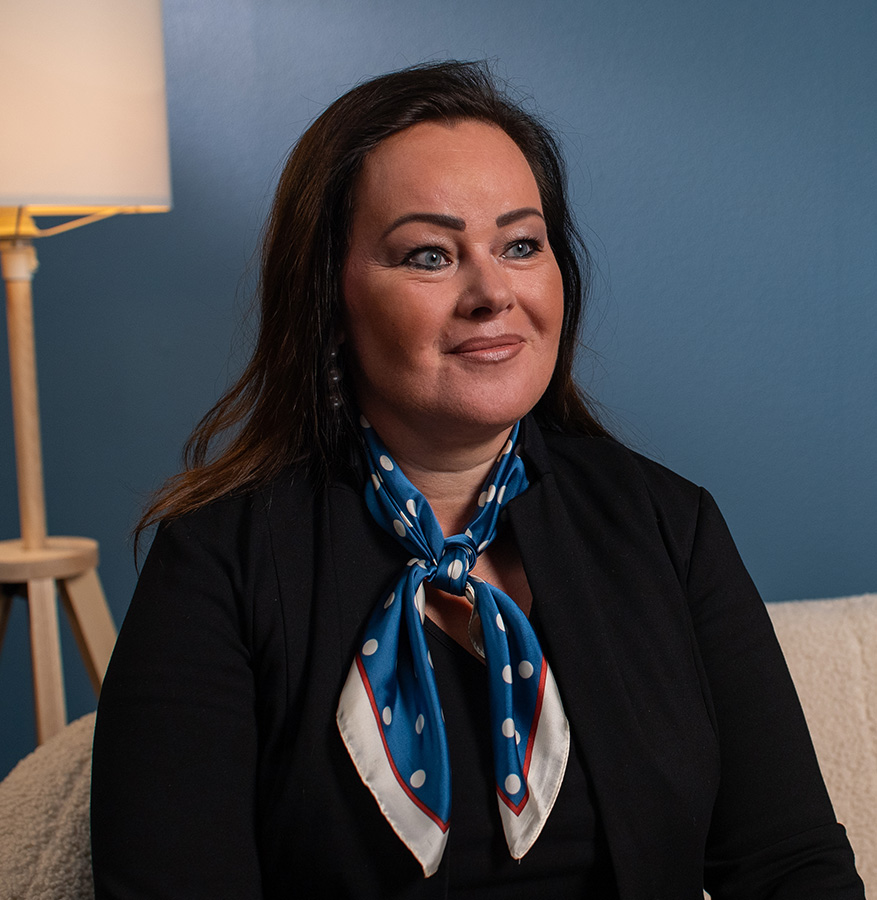
Interview Participants:
Eva Nolendorfa
Founder of “ENJOY HR,”
Certified Coach, Strategic HR Business Partner, and Human Resources Expert
What has been your professional path in human resources?
I have had the pleasure of being closely involved in human resources for nearly 20 years. As I like to say myself, I have been “surfing the waves of HR.” This experience was gained in many companies, including some of Latvia’s leading organizations. A particularly important stage in my career was at Brabantia Latvia, where, together with Georgijs Buklovskis and a fantastic team, we created a true success story: twice recognized as business efficiency champions in Latvia, with a very strong employer image, reputation, and a distinctly people-centered approach. In my view, that is extremely important.
After that, I had the opportunity to consult for various companies. The experience gained at Brabantia Latvia was put into practice, using strong HR tools to develop processes in other companies and help them grow.
Then came an opportunity from one of the sunniest cities in Latvia – Dobele. There, I joined Tenachem, a company operating in chemical processing manufacturing. My specific task was company transformation. And yes – it is possible! A strategic HR business partner, not just an HR manager, archivist, or administrator, can contribute to transforming a company in just two years into “Employer of the Year” in the region, a recognized manufacturer, and a family-friendly workplace with a high reputation and strong employer image, all built from the employee experience.
These 20 years have culminated in the creation of Enjoy HR, my own company. Naturally, the letters E and N represent my name – Eva Nolendorfa, “joy” symbolizes delight, and HR is human resources. My core mission is to approach HR with joy – an area that is both vast and critically important for fostering healthy companies in Latvia and well-being for their employees.
Recently, at a leading HR conference, we discussed the topic “Healthy Employee Code and Healthy Organization Code.” What we understood is that more than 70% of organizations in Latvia are currently not healthy – a critical issue. I am interested in going deeper, studying what has happened and what can be done about it. Enjoy HR is a platform through which we help transform companies – consulting, conducting masterclasses, providing practical HR tools, and analyzing what is “unhealthy” in an organization, identifying opportunities for improvement.
I believe it is essential for HR managers to actively contribute to creating a continuous improvement culture. They are value architects, strong supporters of achieving higher goals across the team, and trusted partners – empathetic, collaboration- and innovation-oriented. They serve as role models for the behavior and culture expected from the team.
How would you describe modern human resources management?
A modern HR manager is a strategic business partner. This is someone fully integrated into the management team, an indispensable part of it, empowered to make strategic business decisions. Such an HR professional does not rely on emotions but works with data and facts and excels at developing HR strategies within the company.
What is the role of HR in company efficiency, sustainability, and long-term development?
Practically all critical internal communication flows through HR. Therefore, an HR manager must be a leader with high emotional intelligence, loyalty, and progressive thinking to successfully design and maintain these processes. They are value carriers – clearly defining company values and bringing them to life daily, not leaving them framed on a wall.
A strong HR manager understands the company’s bigger purpose and helps employees see it, enabling them to align and move in a shared direction. They also consider employee sustainability. What do we mean by sustainability? It is employee engagement and loyalty over five, fifteen, or even twenty years. It starts with quality onboarding, a thoughtful first-day program, regular 1:1 meetings, and feedback that cares not only about results but also employee emotional well-being.
Currently, we talk a lot about burnout and depression, and these risks are amplified by external factors. Additional challenges arise with hybrid and flexible work schedules – these have many benefits, but decisions must be deliberate and balanced.
Sustainability also includes ergonomics – standing desks, proper chairs for back support, and overall employee care. Wellness packages are also critical: health insurance, accident insurance, special thematic days, meetings with mentors, and experts discussing wellness and personal growth.
I strongly believe that in a truly people-focused company, care for employees begins the moment they join and continues until the moment they leave.
What consequences can arise if HR is not developed strategically?
One of the biggest challenges for companies today is attracting, successfully integrating, and retaining employees long-term. If an HR manager sees their role as simply completing an eight-hour daily task without proactivity, commitment, or a focus on higher organizational goals, the company risks losing in the competitive job market.
Why? New generations entering the workforce have different expectations. They want clarity, structure, and transparency, and they want results quickly. A traditional HR approach – “post a vacancy and see who comes” – is no longer sufficient. A strategic HR manager thinks differently: How quickly can we post a vacancy? How do we structure it strategically? Which channels yield the best candidates? How can we integrate a new employee into the team and existing processes as efficiently as possible?
If strategic thinking is absent, and the HR manager’s main tasks are only signing contracts, issuing safety instructions, and saying, “Here’s your workstation, work eight hours,” the company will likely fall behind. An HR manager must strengthen their internal conviction about the importance and value of their work in organizational development.
“Management and Leadership in a Manager’s Daily Work”
Instructor:
Valters Gražulis
WIN partners
The goal of the program “Management and Leadership in a Manager’s Daily Work” is to help managers learn and integrate modern leadership methods with business performance management. It aims to strengthen managers’ confidence, enable them to support their teams during stressful and challenging situations, and help them maintain focus on personal responsibility and their own actions amid changing internal and external conditions.
The training program addresses the following questions:
- What distinguishes management from leadership?
- How can leadership be developed?
- What characterizes a good leader, or what is the “chemical composition” of a leader?
- How to effectively manage team work to achieve results?
- How to understand when to apply management methods and when to use leadership approaches in different work situations?
Before the training, we can create an electronic survey tailored to the client’s needs, in which each participant receives feedback from their team and manager on both their strengths and areas for improvement.
What do the program participants gain?
- Learn to distinguish and apply leadership and management methods according to the work situation
- Identify their current stage of leadership development in relation to the team and individual team members
- Receive an action plan outlining the steps needed to reach the next stage of leadership development
Target audience:
Middle- and senior-level managers
Duration:
- Online: 3.5 hours × 4 sessions
- In-person: 6 hours × 2 sessions
The European Commission continues to support business development and sector modernization across Europe by providing funding for innovation, digitalization, and the development of digital skills. In a new announcement on 9 October 2025, the Commission is offering several project calls totaling approximately €204 million to promote digitalization in the industrial and automotive sectors, as well as in the public and health sectors. In this context, the European Commission emphasizes:
“These project calls will provide significant support to companies and sector participants, enabling them to implement innovations, digitalize processes, and develop digital skills. This will promote not only the competitiveness of individual companies but also the modernization of entire sectors and long-term growth within the European Union.”
Source: digital-strategy.ec.europa.eu
Remote training format for companies
Latvian Window and Door Manufacturers Association
The Latvian Window and Door Manufacturers Association offers a training project: “Skills Development and Productivity Training Project for Employees in the Construction Industry and Related Sectors.”
Project No.: 4.2.4.1/1/24/A/006
The project will be implemented until 31 December 2029.
To apply, please send an information request to: apmacibas@lldra.lv
The project is based on the objectives of the European Union Cohesion Policy Programme:
- Promote lifelong learning
- Provide flexible opportunities for skills development and retraining
- Support the need to acquire new skills
- Facilitate professional mobility
The project is implemented with financial support from the European Social Fund Plus (ESF+).
The opinions and views expressed in this publication are solely those of the author(s) and do not necessarily reflect the views of the European Union or the European Commission.
Neither the European Union nor the European Commission is responsible for them.
INFORMATION ON ACCESSIBILITY OF THE PROJECT IMPLEMENTATION LOCATIONS:
Within the project, measures are provided to ensure the accessibility of project implementation locations for people with disabilities and functional impairments, parents with young children, and seniors, including.:
- Employed persons, through their employer (the project’s end beneficiary), are provided access to information about the training location, its accessibility, and equipment, including the possibility to join the training remotely.
- Employed persons, through their employer (the project’s end beneficiary), are provided access to information about qualification enhancement activities and opportunities within companies. Upon request, information is provided by the Association (the project implementer) using the contact details specified in the project.
- Employers (the project’s end beneficiaries), when applying to participate in the project, are encouraged to inform about the need for support measures to ensure accessibility for people with disabilities and functional impairments, parents with young children, and seniors.
- The project is implemented with financial support from the European Social Fund Plus (ESF+).
The views and opinions expressed in this publication are solely those of the author(s) and do not necessarily reflect the views or opinions of the European Union or the European Commission.
Neither the European Union nor the European Commission is responsible for them.